680. Faith is neither shield nor weapon

680 (a). Faith is neither shield nor weapon

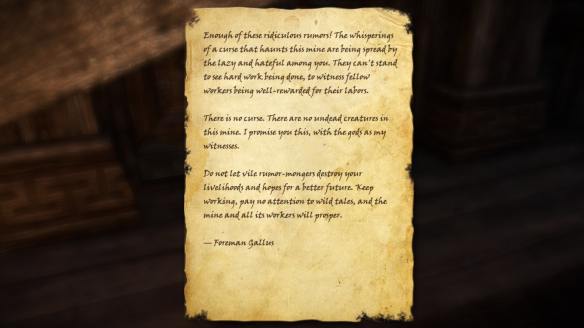
It is not possible to live a normal life when your country is at war, even when the fighting is far away. For the people of Cyrodiil it is not necessarily the fighting amongst the invading Banner’s that they fear the most, but the consequences of their fighting; the anarchy that is no longer controlled, the bandits, wild beasts, daedra, and risen dead that are no longer kept in check. At the Waterside Mine for example, I discover the site deserted and littered with the bodies of dead miners. Quickly however I discover that the fallen are not so lifeless after-all, and as I approach the bodies, they twitch, rise and attack.

680 (d). Faith is neither shield nor weapon

I suspect that in more peaceful times at the first sign of the undead a squad would have been sent out from the nearby Drakelowe Keep, and the problem would have been dealt with by the Legions long before the entire mine was lost. Once the people of Cyrodiil could live relatively safe lives, perhaps even enjoying the luxury of grumbling about the strict, heavy-handed, uncivil legionnaires that restrict their freedoms, because their freedoms were protected by those strict, heavy-handed, uncivil legionnaires. But now there are no Legions to protect the province, there is no one to confront violence on their behalf, and faith alone is neither shield nor weapon. How long can they rely upon passing mercenaries and adventurers? If the people of Cyrodiil are to survive this war, they must learn quickly how to defend themselves.
680 (g). Faith is neither shield nor weapon

S.K

679. There’s nowt so macabre as a lonely necromancer.

679 (a). There’s nowt so macabre as a lonely necromancer.

Talking to the dead is something most of us do at times in our life. Whether it be to a lost parent, a pet, or a friend, often because it is easier than talking to the living, or we simply have no one living to talk to.

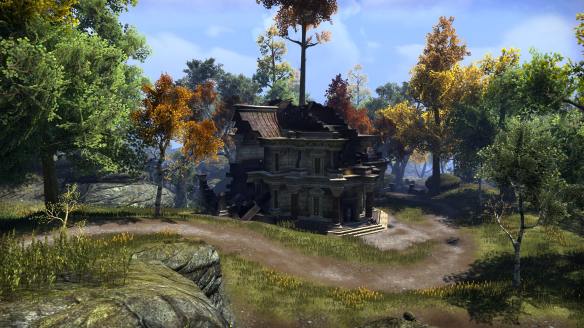
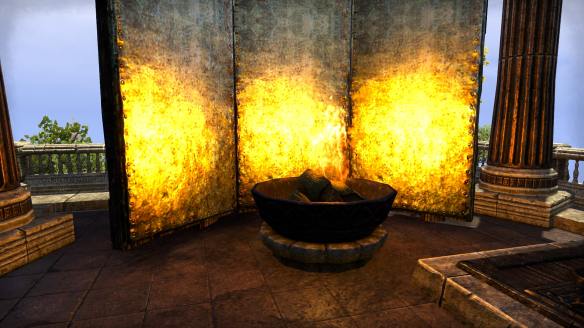
At an isolated estate in eastern Cyrodiil, I find a lonely necromancer, Jaretius Illvina, tending six skeletons arranged on benches around a fire. He moves between them with a godless calm conversing with his ‘friends and family’ as if they were still alive. Meanwhile back at his house I discover another skeleton, but this one is animate, obdurately cleaning the house paying no heed to myself or anything else around her. This mannequin was apparently once his wife. I presume only lack of talent has prevented him from reanimating his whole family.

679 (d). There’s nowt so macabre as a lonely necromancer.

I can find no explanation for this lurid scene, and am left none the wiser after speaking to Jaretius himself. Perhaps his macabre madness is a mercy, for he obviously finds some sanctuary within his own insanity. It is perhaps callous of us to expect the grief stricken to remain sane. Some of us choose to live alone because we are not comfortable with the living, but others cannot, and in their need for company sometimes resort to desperate, insane measures. The saying goes that it is better to have lost love, then never to have found it at all. I wonder. Sometimes I think I am the lucky one never to have found it.

S.K

678. The last flicker of light in the darkness all about

678 (a). The last flicker of light in the darkness all about

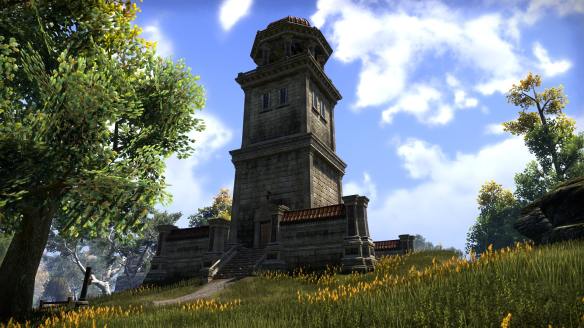
The flame has gone out at the Crown Point watchtower overlooking the town of Cropsford. The townsfolk see the flame as a sign of good luck, and to lift their spirits I have been asked to relight it. But to what point? The flame will not stop the war, the undead, the goblins or the bandits. The watchtower is no longer manned, and so the flame will just go out again when the weather turns. It is but a superstition born of fear that matters not. What is to be, will be, and no flame will change that. The people would do better concentrating on themselves and staying alive.

678 (b). The last flicker of light in the darkness all about

I ride on past the watchtower down to the Hedoran Estate. The family who once lived here were killed by bandits and their estate burnt to the ground. Reportedly the bandits have set up camp in the remains of the estate and the Prefect has asked that I recover any valuables I can find in the remains, preferring that the townspeople should profit from ‘What the dead don’t need‘ rather then the bandits. The burnt out estate is a stark reminder that whilst we may blame the current suffering of the Cyrodils on the malevolence of the Daedra, the corruption of nobility, and the greed of the invading Banners. There are just as many villainous citizens of these lands who have turned against their own people.

What the dead don’t need’ is a rather pragmatic attitude to hold as a town Prefect. I guess pragmatism is something that grows within us all the longer we suffer war. Perhaps before this Banners war the Prefect might have been aghast at the idea of profiteering from the possessions of their dead neighbours. Maybe now they think that where death was once a shock, one has become accustomed to it, almost to the point where it has become mundane. But death is not something one ever gets used to it. A soldier will tell you they never get used to losing comrades, just like a person who grows old and watches their friends and family die one by one all about them. Each time we lose someone, something dies within us too, sentiment. Whether comrades, friends, family, or neighbours, sentiment withers with each lose, till all that is left is cold, hard, pragmatism… and yet.

And yet the people cling to a superstition, the last remnants of a normal life, a life before this war, before the bandits, the risen dead, and the goblins. The last flicker of light in the darkness all about.

I return to the tower and relight the flame.

678 (h). The last flicker of light in the darkness all about

S.K

677. The shambling dead

677 (a). The shambling dead

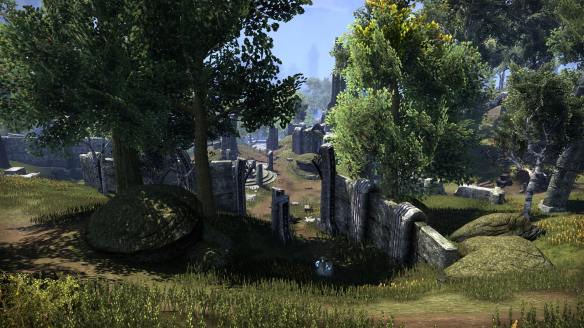
Just to the Southwest of the town of Cropsford lies the Ayleid ruins of Culotte. An ancient Ayleid Well can be also be found at the site around which the townsfolk had once reported seeing cultists, but now all they see are ghouls, wraiths and zombies. Cropsford’s leaders, fearing that the undead will one day come shambling into town, occasionally pay mercenaries like myself to the go to the ruins and cull their numbers.

The townsfolk blame the cultists for stirring up the undead and perhaps they are right. But the cultists are long gone now and the undead continue to rise. Perhaps it is the enduring power of these Ayleid Wells that fuels their necromantic spells long after the cultists are gone. I recall seeing one such Well on the Isle of Betnikh at the ruins of Moriseli, where the Orc spirits of the Seamount Clan were summoned by the Reachman cultist Drusilla Nerva. Long after I had cut her down and set the restless spirit of Warcaller Targoth to rest, the Orc spirits continue to rise and roam. And again in Glenumbra, an Ayleid Well lies at the heart of the ruin’s of Enduum, where no matter how many skeletons are smashed by spell and blade, more soon rise to replace them.

677 (e). The shambling dead

The wells themselves are said to replenish their magicka at midnight, thus such necromantic spells may in effect, be eternal. To my mind such fountains of power should not be left unattended, I might even go so far as to suggest that they all be destroyed. It is all well and good for the scholars and mages to claim that one day they may learn to harness the magicka for the good of Tamriel. Yet it has been almost 3000 years since the Empire of the Ayleids fell and we know as little about them now as we did then.

677 (h). The shambling dead

S.K

676. The trouble with goblins

676 (a). The trouble with goblins

You can’t go far outside of Cropsford without seeing a goblin or two hiding amongst the trees, or skulking in the hillsides, just waiting upon an opportunity to pillage the storehouse or any harvest left unguarded in the fields. The leaders of the town fear that the many small tribes will one day band together and attack Cropsford in number. So certain are they of this inevitable attack that they have taken to hiding some of their books and tomes by a waterfall just outside of the town lest the goblins destroy them in a raid, as they have heard stories of town’s entire libraries being striped for kindling.

They say that members of the largest tribe, the Bloody Hand, have been spotted lurking on the outskirts, watching the villagers. They ask me to ‘deal’ with one of the skirmishers, to dissuade any imprudent endeavours the goblins might be planning. Yet not all see the goblins as an impending menace. A reclusive chef from Daggerfall for instance has taken to feeding one, and almost adopting it as a tamed pet. Although he does not see it that way, claiming they are misunderstood and when treated kindly, can be friendly, and loving… which sounds much like a tamed pet. In much the same way however, the town leaders themselves think they can fend off future attacks by the goblins by simply allowing them to raid their warehouse occasionally. It makes about as much sense to me as a shepherd allowing a wolf pack the odd sheep from his flock every now and again to abate their appetite.

But even so, the leaders still understand that pests need to be culled in order to keep them under control, so I am sent into nearby Timberscar Hollow to kill a goblin leader. Unfortunately when I return I learn that the Bloody Hand goblins have again raided the storehouse, but this time they took the seeds upon which next year’s crops depend; without them, the town will possibly starve. Whilst several townsfolk chased the goblins back to their lair in Cracked Wood Cave, none have returned. So it is for me to retrieve the seeds, and rather then treating them as misbehaving pets, I shall hunt them down like the wild beasts they are.

S.K