657. A stain upon every banner

657 (a). A stain upon every banner

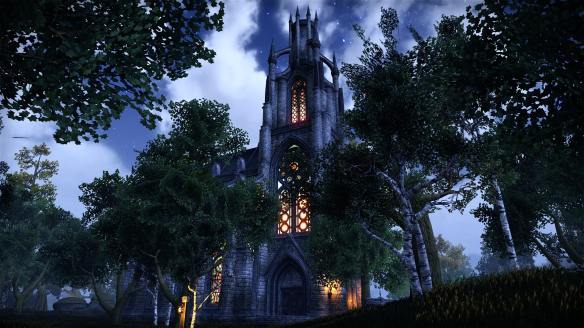
In happier, more peaceful times it was said that the Colovian forest could offer a person of faith all the sanctuary they need, but it seems now neither piety or priory is enough to offer the faithful protection against the damnable deeds of cowards.

Defenceless against corrupted heart and afflicted disposition, the Gottlesfont Priory will soon be forced to close its doors. Only a few faithful now remain to tell of that harrowing night when soldiers smashed down their doors, killing the abbot and the few priests who dared resist, and pillaging all they deemed of value. Even amongst the heretic Dark Elves or the tree worshipping lizards, there exists a shared morality that during times of war you never deliberately target the innocent.

657 (d). A stain upon every banner

And yet there are people who will try to tell you that most of the evil in this world is done in the name of faith, or by people with good intentions. The worst evil is, and always has been done by those too craven to avoid doing what they know to be wrong, or too afraid to do what they know to be right.

657 (e). A stain upon every banner

When the flame of Gottlesfont is extinguished and the doors are eventually closed, it will be a stain upon every banner of Tamriel.

S.K
656. An aggression of Ogres

656 (a). An aggression of Ogres

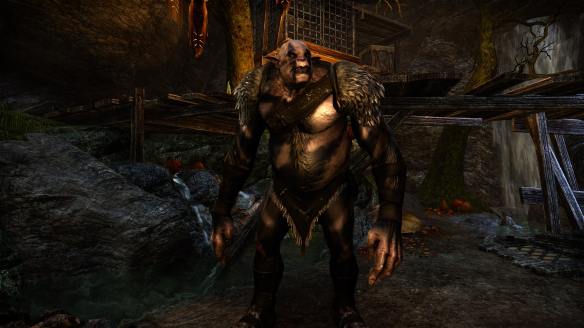
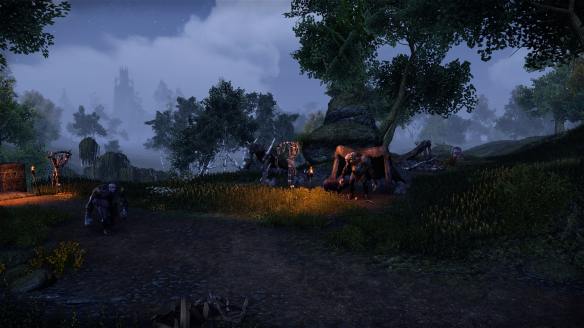
I spotted their makeshift shelters first, grimy animal skins stretched taut over wood and bone, with large rocks placed as ballast, the traditional shelters of the Ogre. Growing up in rural Cyrodiil we were taught from a very young age to recognise such structures and give them the widest possible berth. For like the wild bears they share their hunting grounds with, whilst they will shy from human contact, they are easily startled and are ferocious when they feel threatened. If left alone however they generally stay clear of human or mer settlements, unless it is to pinch the odd vulnerable livestock.

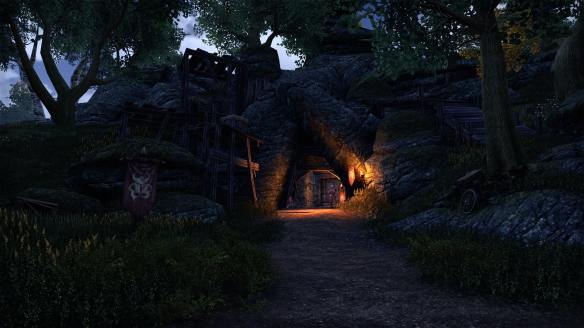
No matter how primitive they may seem to us, these humble shelters, along with their crude goblin-like tributes to Malacath, are to be found throughout the out-lands of Tamriel, proof perhaps that these brutish, uncivilised creatures have a shared culture, making them more then just animals. Usually they live in small communities, but perhaps it is that they are gathering together at the Serpent Hollow Cave, along with the bear matriarch and her sloth of bears, for mutual preservation against such large numbers of soldiers roaming this war ravaged land.

However, I remember the threat the Ironhands Ogres posed in Stormhaven when from the Wrothgar mountains they gathered in large number to raid Gavauden. That was perhaps the first time in generations humans had witnessed the threat of an aggression of Ogres with a common, and shared purpose. Indeed, if not for the aid of the Murtag Orc Clan and their General, the dream tormented Godrum, the whole of eastern Stormhaven may have come to resemble Aphren’s Hold.

656 (g). An aggression of Ogres

I do wonder if once upon a time we may have been closer to ogres, perhaps in the Merethic age when out of common need we may have co-existed side by side, as they sometimes do now with the goblin tribes. As we grew more civilised however, they seemed to us to be more wild. Such a close relationship with the wild bears suggests that they are now closer to beasts then either men or mer, and perhaps it is inevitable even that one day they will be but beasts and disappear into the wilderness forever; their makeshift shelters becoming little more then Antiquarian oddities.

S.K

655. Fortune’s fool?

655 (a). Fortune’s fool

Our lives are full of moments and cruxes that we attribute to luck; whether that luck is then considered good or bad is purely a matter of perspective. For every player that is dealt a good hand in a game of Tribute, there will be others that will inevitably be dealt bad. For every person in the right place at the right time, there will be somebody who ends up in the wrong place at the wrong time. Whenever I hear the comforting tale of someone unlikely saved, there is also a lament of one who wasn’t. Can it be just luck, or is there something more at work?

Take my experience this evening at the Breakneck Cave. I knew its doors were closed a long time before the war began because of the well publicised spider infestation, so it was a surprise as I rode past on my way to Vlastarus in the south to find bandits were guarding its entrance. Of course nothing says ‘welcome, please come in’ more to an adventurer then armed hoodlums guarding a door.

At first glance it appeared the Black Daggers were using the caves as a warehouse of sorts, yet they clearly hadn’t overcome the spider problem. However, as I delved further down beyond the crates and barrels it occurred to me that this number of guards for such small amount of provisions was somewhat overkill. And that is when I spied Hegris, the leader of the Black Dagger bandits.

Clearly Hegris is a dangerous man, you don’t get to climb the ranks to become leader of the largest bandit gang in the Heartlands without being ruthless, callous a cut-throat, and perhaps a little lucky; although I am sure this Nord will tell you his luck was simply the warriors advantage. But it wasn’t simply down to luck that I discovered Hegris in the Breakneck Caves today, it was cause and effect. I chose to ride past the abandoned cave, and made a choice to challenge the guards at the door, and Hegris himself chose to visit this very same day, which proved to be his last. Perhaps then this is all luck really is, a cause, an effect, and a matter of perspective.

S.K

654. Vampire’s nature

654 (b). Vampire nature

For as long as men have walked these Colovian highlands, vampires have stalked their trail. From the lone fiend preying upon village or homestead, to the clandestine covens in secluded caves and remote ruins working toward nefarious purpose. Up until recently I would have remorselessly put down these undead creatures without hesitation as I would any other rabid beast. But having met the Ravenwatch clan in Rivenspire from whom I learnt that vampires weren’t just ravenous undead, but can be lucid and aware. Retaining many characteristics of their former natures in undeath, they are capable of both reason and compassion; and that makes them monsters.

Two residents of Weynon Priory have been kidnapped by vampires during the night and taken to an ancient Ayleid ruin known locally as the Lipsand Tarn. The acolytes fear that they may have already been killed and risen again as bloodfiends, mindless feral undead, little more then skeevers under the vampires thrall.

654 (e). Vampire nature

I find the ruins infested with these bloodfiends banqueting upon fresh cadavers by suckled gore, under the unhallowed gaze of their vampire overseers. The cold corpses of the villagers lie atop stone tables in bloody shrouds and with a whispered orison to Arkay, I set their bodies ablaze.

It would be foolish for me not to at least attempt to put down the leaders of this coven whilst I am here. Marbita, a Redguard woman in life, and Gaston Ashham a Breton together head this Bloodborn coven; until I find the means to behead them both.

I could discover no motive for why this coven are building such a force of bloodfiends in this secluded ruin. But I did find a note which suggested that Ashham travelled all the way to Cyrodiil from Stormhaven with a sister. Perhaps I shall find her in another delve, or perhaps she shall find me first; after-all, to thirst for revenge is only human nature.

S.K

653. The weight of the innocent

In such turbid times when criminals are no longer punished by the hands of the law, they must be punished by the hands of other men.

The Black Dagger bandits have long been a pestilence upon the Colovian countryside, but since the onset of this Banners war, there has no longer been any authority around to bring them to justice, and so they feel free to pillage and murder with impunity. The acolytes of Weynon feel powerless against such injustices, and so after the torture and murder of their emissaries and the theft of an ancient relic from their Priory, they has resorted to requesting aid from any mercenary who happens by.

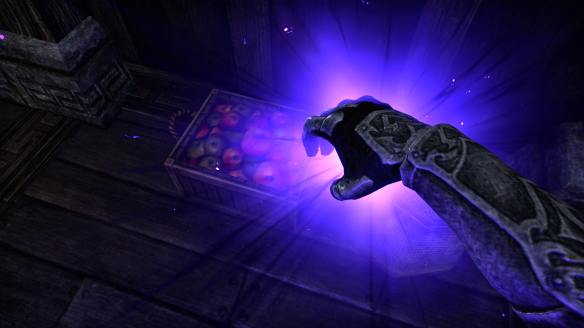
They ask first that I retrieve their relic from the bandit camp to the west, and next that I find the abandoned house where the bandits store their supplies and poison their food. That such devout men should make such a request shows how dismayed and despairing they have become. I guess it is a burden upon the conscience of men of faith to have to weigh such an iniquitous act against the lives of innocents the act might save. They are not the first, and not the last to fret if their one bad deed might wash away all the good.

653 (g). The weight of the innocent

S.K