652. The Lich of Lindai

652 (a). The Lich of Lindai652 (b). The Lich of Lindai

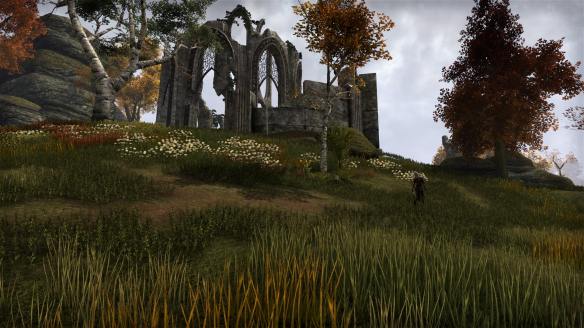
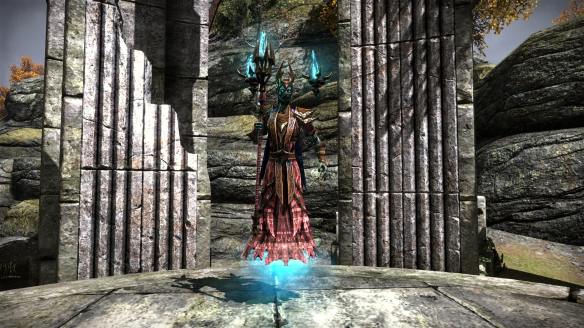
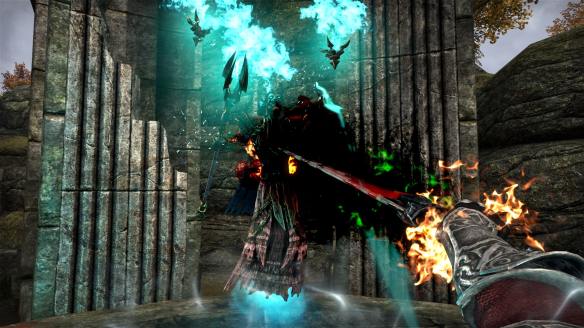
The acolytes of Weynon Priory tell me that a Lich has been risen by the Shadowed Path cult in the Ayleid ruins of Lindai to the east. They fear that if this fiend isn’t destroyed, it’s corruption will quickly spread threatening the Priory, Chorrol and beyond.
652 (c). The Lich of Lindai

Emperor Leovic’s infamous decree six years ago legalizing Daedra worship across the empire gave rise to a number of these necromantic cults. Perhaps only the Betrayer’s Black Worms who supplanted the Mages Guild in the Imperial city, now holds more power and sway in Cyrodiil then the Shadowed Path. But if left unchecked with a lich to lead them the cults influence across the province could become unstoppable.

Necromancy, whilst still considered dangerous, immoral and heretical by most Divine worshipping cultures, has become far more widespread and passively accepted in recent years. To the point where even the Mages guild have begun accepting necromancers, arguing that their discipline is but a division of the conjuration school of magic; though officially it is still a practice banned within their guild halls.
652 (f). The Lich of Lindai

I am not a moral man, but surely damned are those who cower behind neutrality in times of great moral crisis. To what principles I hold, the assumption of necromancers that the dead are without rights and that our treatment of their mortal remains has no moral significance, is outrageous.

S.K
651. Faith and fate

651 (a). Faith and fate

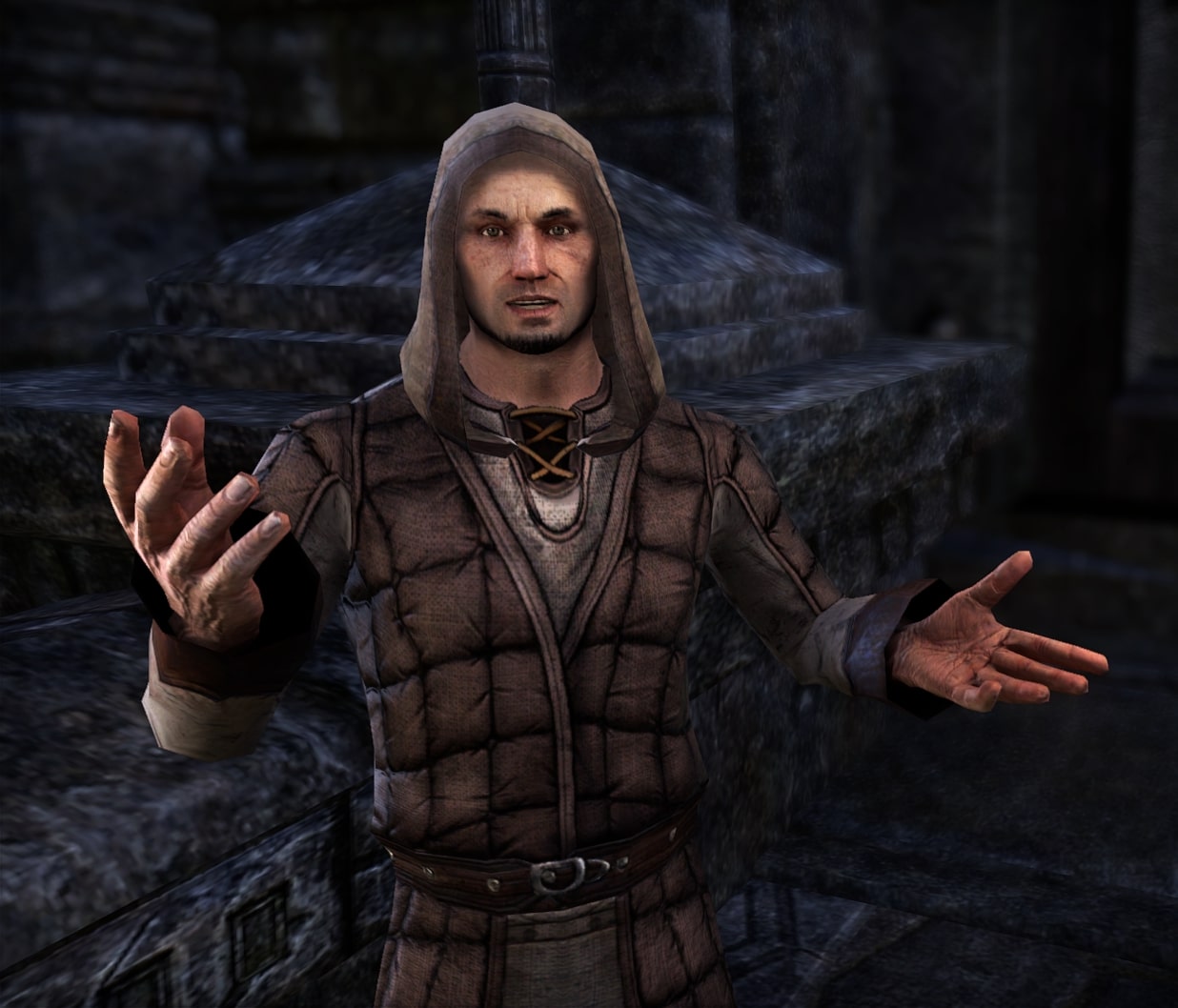
The devout acolytes of the Weynon Priory will tell you that the most important thing in their life is their faith. But faith nourishes only the soul, for the body the Priory relies upon sending people out to collect vital supplies from towns and forts around the province. One such courier, Lucius, has not yet returned from an expedition to Pell’s Gate, and the acolytes fear for his fate, and that of the desperately needed supplies.

Unfortunately the news I had heard back in a tavern at the High Rock Gates was that, like so many small settlements in the region since losing the protection of the Legions, Pell’s Gate had been left but a smouldering ruin by bandits. I have not the heart yet to pass on that news, not whilst the acolytes still cradle the hope that their friend yet lives. They believe he may be camped out in Coldcorn Ruins, an old fort to the east he regularly used as a camp.

651 (d). Faith and fate

I arrive at the ruined fort only to find a group of trolls has moved into the area. Trolls are usually solitary creatures, to find such a horde living together is rare. But I guess with so many armies battling across the province even these beasts feel safer in a pack. The many ruined forts scattered across the Lonely Hills make perfect refuges for them during the day, before heading out at night to scavenge the battlefields of men and mer.

651 (g). Faith and fate

Within the last standing tower of Coldcorn I find a body. Alas that Lucius had survived the bandits at Pell’s Gate and somehow miraculously returned with the much needed supplies, only to fall victim at the last furlong to an unlikely band of trolls. It seems even Akatosh holds no sway over fate.

S.K

650. The Weynon Priory

650 (a). The Weynon Priory

Just east of Chorrol on the edge of the Great Forest can be found the Weynon Priory, an abbey dedicated to the dragon god Akatosh. As one might expect the priory remains neutral to the Banners, yet has been far from unaffected by the ongoing war outside its walls. Targeted by both the Black Dagger bandits and a necromantic cult calling themselves the Shadowed Path, the priory has only survived thanks to the aid of passing soldiers and adventurers of all Banners.

People of all backgrounds come to Weynon Priory, some to keep their faith pure, others seeking guidance or understanding through reflection and contemplation. Like Viivitar a High Elf who claims to have “…found the peace I never knew as an adventurer.” Or the Imperial Candria Rullus who spends her days kneeling in her favourite spot with, “…Nature’s beauty spread before me, yet I can feel the warmth of Akatosh’s presence at my back.“ Or even the Dark Elf acolyte Tama who is happy to share her tale of how a chance encounter with a priest of Akatosh inspired her to leave her homeland and make the long and arduous journey to the Priory. “…Akatosh guided me here”, she says, “protecting me from the dangers of the long road. I will serve him the rest of my days.

650 (g). The Weynon Priory

Yet not everyone finds what they are searching for in the Priory. Rogeraud complains that when he asks how and why, he is told that Akatosh’s plan is beyond mortal ability to understand. Even in a monastery arguments are fitted to practice, and truths are hidden behind stained glass and piety.

650 (h). The Weynon Priory

This is because a monastery is not built to answer questions or solve problems, but to hide from them. These acolytes live like birds in a cupped hand, with all their needs taken care of. They have work, a roof over head, food on the table, clothing on their back, all they have to do is promise to never leave the security of the Priory… Sounds much like a prison to me.

S.K

649. One night in Chorrol 2 – The lonely bandit

649 (a). One night in Chorrol 2 - The lonely bandit

It is often during times of deepest strife that bandits and brigands will seek to exploit the lack of law, order and honour for their own gain. But exploitation of the weak is not the only reason people turn to banditry when lands are in turmoil. Many peasants turn to thievery because sometimes people have to make a rational choice between suffering and survival. For others left all alone and disaffected, bandit gangs can offer a kinship, a solidarity reinforced through brotherhood and adoption. Whilst seditious veterans have also been known to roam war-torn countrysides in predatory groups.

649 (b). One night in Chorrol 2 - The lonely bandit

I don’t know why Lliae the Quick first turned to banditry, fate often greets one on the roads you take to avoid destiny, but it hasn’t turn out well for her. She is now the last living member of the Quickstep Bandits, and seeks revenge against the Black Daggers for their part in the killing of her friends. The Black Daggers have plagued the northern Colovian countryside for years, but with the onset of the war they have expanded their organization to other parts of Cyrodiil. To expand so rapidly however these bandits would need an underwriter or two, so it would not surprise me to discover they are but puppets for a far greater menace, an alliance or prince perhaps attempting to undermine the province for some strategic gain.

Usually I would not consider taking a bandits coin for honest work, but when honour and the law no longer stand on the same side, a bandit’s coin is as honest as any other. Thankfully much of what Lliae asks of me indirectly benefits the people of chorrol as much as it does her. From thinning the number of flame atronachs that plague the town, eliminating the bandits who have overrun the nearby village of Hackdirt, to putting down an ill-tempered spirit haunting the ruins of Narsinfel.

649 (j). One night in Chorrol 2 - The lonely bandit

When she has no more tasks to offer, her life a little more safer, her thirst for revenge a little more sated, I wonder at her next endeavor. Of course it shows strength to get back up and start again after one has been knocked down, but sometimes it shows more character to move on. One must accept that at some point in everyone’s life, the withered leaves of autumn will not grow back in spring. Whatever road Lliae the Quick takes next, I hope fate greets the lonely bandit a long, long way from Cyrodiil.

S.K

648. One night in Chorrol 1 – Everyday heroes

648 (a). One night in Chorrol 1 - Everyday heroes

Even in war-torn Cyrodiil, not all the heroes wear armour. Not all heroes are trained to fight, siege forts, or cast spells; be them destructive or restorative. The unsung heroes of this war are ordinary people. The people who suffer, often against great hardships inflicted upon them by armed and armoured ‘heroes’, and yet they endure. It is these very people that hold this province together, despite the invading outsiders attempts to rip it apart. It is upon the fortitude of these people that the foundations of empires are built. It is these people who are the everyday heroes.

It is evening when I arrive in Chorrol, a small town set amidst the rugged Colovian Crags. In the Imperial City we had heard the troubling news of what happened here, the earthquake that devastated the town and the resulting fissure through cutting its heart, a direct ramification of the Worm’s betrayal. What I did not expect to find four year later however is that the town is suffering from quakes still. It’s buildings are slowly crumbling and sinking into the ground. The fissure glowing bloody red in the dusk light splits Chorrol like an open wound from which fetid smoke and gases rise. The broiling lava has attracted flame atronachs in sinister number. For the townsfolk, simply crossing from one side of Chorrol to the other can be a perilous undertaking.

What more, Chorrol has been plagued by bandits, food is scarce as their crops are regularly pillaged, and yet the armies of the alliances who regularly pass through offer the people no aid. Even the Covenant guards patrolling the streets I see seemingly turn a blind eye to the open desecrations of grave robbers.

Despite their suffering and loss, the years of famine, the daily injustice of crimes unpunished, the monsters in their fields, and the churlish invaders, the people of Chorrol refuse to bow to their sorrows. They remain admirably resolute, ‘In spite all this we stay’, they tell me, ‘because it is still our home.’ Despite their obvious need the people refuse my offer of aid and tell me their inns are full. I cannot blame them for mistrusting a stranger, especially one dressed in Imperial armour. In fact the only work I am offered in Chorrol is from a solitary bandit hiding in the dusky night.

S.K