682. Cheydinhal

682 (a). Cheydinhal

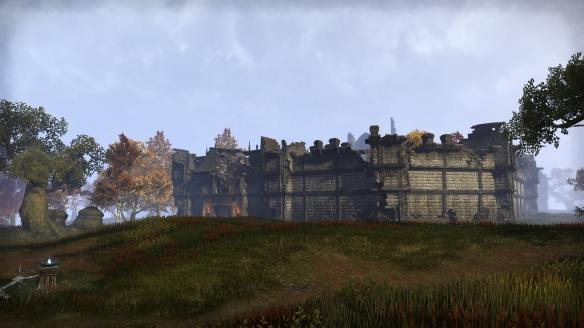
The walled city of Cheydinhal in eastern Cyrodiil is one of the few cities left in the province still under the control of the Imperial Legion. The good news is the presence of an Imperial garrison seems to have ensured that the people do not suffer attacks from bandits, goblins, or wayward Banners as other settlements in the area have. The bad news however is that the garrison’s leaders have acted overly oppressive towards the people of the city, even going so far as to try and force all able-bodied residence to draft into their ranks.

682 (d). Cheydinhal

682 (i). Cheydinhal

Unsurprisingly the people have revolted against this tyranny, forming their own militia, and I arrive to find the city is split in two by the river that runs through its heart; with the west side under rebel control, and the east controlled by the Legion. Despite this civil war within their walls, many of its people have chosen not to flee, staying in their homes and putting their faith in the leaders of the revolt. In reality they probably wouldn’t find anywhere safer outside the city’s high walls anyhow. At least the troubles within the walls seem to be keeping the troubles outside, out.

I remember visiting Cheydinhal as I was growing up, the first landmark one would look for on the approach to the city was the top of the spire of the Great Chapel of Arkay. I recall it being a lively, prosperous city; a bustling stop-over for merchants and adventurers upon the blue road to Morrowind. It is also the ancestral home of House Tharn, though despite Meridia suggesting he would return to Cyrodiil after the Planemeld, I don’t expect to find Abnur hiding out in the bosom of his loving family.

682 (e). Cheydinhal

S.K

681. Love thy neighbour?

681 (a). Love thy neighbour

In the Muck Valley Caverns in eastern Cyrodiil, I discover another tribe of goblins sharing caves with kwama, and giant spiders. It has been suggested that some goblin caves contain networks of tunnels and secret passages that connect all the way back to Morrowind, although I was unable to find any evidence of them here.

681 (d). Love thy neighbour

What has always intrigued me about goblins is their ability to co-exist side by side with other species, like the spiders and kwama in these caves, without any noticeable friction. Indeed they have even managed to domesticate some species like durzogs, and welma, to serve the needs of the tribe.

681 (g). Love thy neighbour

681 (h). Love thy neighbour

Goblins are of course native all over Tamriel, including the Summerset Isles where the Altmer were said to have successfully traded with the tribes for many years until they decided to enslave them. In the 1st era goblins fought alongside the Orcs of Hammerfell against the invading Ra Gada. And Orsinium itself was built with the aid of freed goblin slaves, yet now I hear there is not a goblin to be found within the whole city.

It seems the only creatures that goblins cannot co-exist peaceably with are men and mer. What does that say about us?

S.K

680. Faith is neither shield nor weapon

680 (a). Faith is neither shield nor weapon

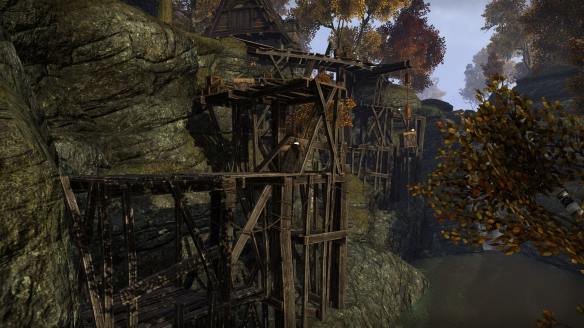
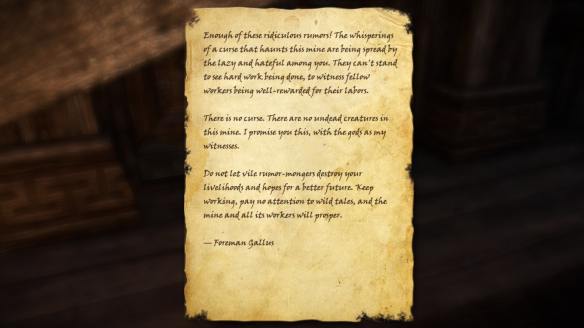
It is not possible to live a normal life when your country is at war, even when the fighting is far away. For the people of Cyrodiil it is not necessarily the fighting amongst the invading Banner’s that they fear the most, but the consequences of their fighting; the anarchy that is no longer controlled, the bandits, wild beasts, daedra, and risen dead that are no longer kept in check. At the Waterside Mine for example, I discover the site deserted and littered with the bodies of dead miners. Quickly however I discover that the fallen are not so lifeless after-all, and as I approach the bodies, they twitch, rise and attack.

680 (d). Faith is neither shield nor weapon

I suspect that in more peaceful times at the first sign of the undead a squad would have been sent out from the nearby Drakelowe Keep, and the problem would have been dealt with by the Legions long before the entire mine was lost. Once the people of Cyrodiil could live relatively safe lives, perhaps even enjoying the luxury of grumbling about the strict, heavy-handed, uncivil legionnaires that restrict their freedoms, because their freedoms were protected by those strict, heavy-handed, uncivil legionnaires. But now there are no Legions to protect the province, there is no one to confront violence on their behalf, and faith alone is neither shield nor weapon. How long can they rely upon passing mercenaries and adventurers? If the people of Cyrodiil are to survive this war, they must learn quickly how to defend themselves.

680 (g). Faith is neither shield nor weapon

S.K

679. There’s nowt so macabre as a lonely necromancer.

679 (a). There’s nowt so macabre as a lonely necromancer.

Talking to the dead is something most of us do at times in our life. Whether it be to a lost parent, a pet, or a friend, often because it is easier than talking to the living, or we simply have no one living to talk to.

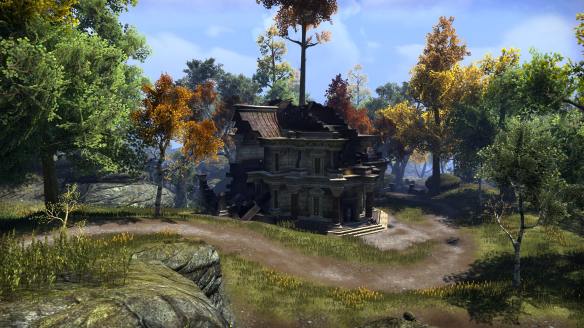
At an isolated estate in eastern Cyrodiil, I find a lonely necromancer, Jaretius Illvina, tending six skeletons arranged on benches around a fire. He moves between them with a godless calm conversing with his ‘friends and family’ as if they were still alive. Meanwhile back at his house I discover another skeleton, but this one is animate, obdurately cleaning the house paying no heed to myself or anything else around her. This mannequin was apparently once his wife. I presume only lack of talent has prevented him from reanimating his whole family.

679 (d). There’s nowt so macabre as a lonely necromancer.

I can find no explanation for this lurid scene, and am left none the wiser after speaking to Jaretius himself. Perhaps his macabre madness is a mercy, for he obviously finds some sanctuary within his own insanity. It is perhaps callous of us to expect the grief stricken to remain sane. Some of us choose to live alone because we are not comfortable with the living, but others cannot, and in their need for company sometimes resort to desperate, insane measures. The saying goes that it is better to have lost love, then never to have found it at all. I wonder. Sometimes I think I am the lucky one never to have found it.

S.K

678. The last flicker of light in the darkness all about

678 (a). The last flicker of light in the darkness all about

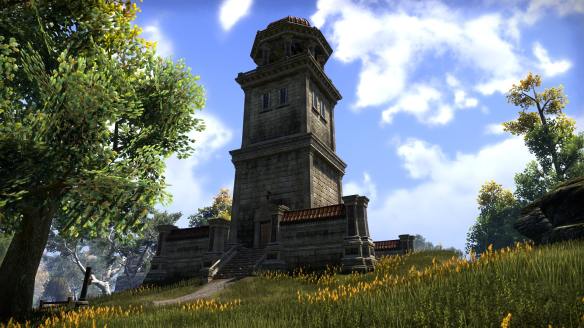
The flame has gone out at the Crown Point watchtower overlooking the town of Cropsford. The townsfolk see the flame as a sign of good luck, and to lift their spirits I have been asked to relight it. But to what point? The flame will not stop the war, the undead, the goblins or the bandits. The watchtower is no longer manned, and so the flame will just go out again when the weather turns. It is but a superstition born of fear that matters not. What is to be, will be, and no flame will change that. The people would do better concentrating on themselves and staying alive.

678 (b). The last flicker of light in the darkness all about

I ride on past the watchtower down to the Hedoran Estate. The family who once lived here were killed by bandits and their estate burnt to the ground. Reportedly the bandits have set up camp in the remains of the estate and the Prefect has asked that I recover any valuables I can find in the remains, preferring that the townspeople should profit from ‘What the dead don’t need‘ rather then the bandits. The burnt out estate is a stark reminder that whilst we may blame the current suffering of the Cyrodils on the malevolence of the Daedra, the corruption of nobility, and the greed of the invading Banners. There are just as many villainous citizens of these lands who have turned against their own people.

What the dead don’t need’ is a rather pragmatic attitude to hold as a town Prefect. I guess pragmatism is something that grows within us all the longer we suffer war. Perhaps before this Banners war the Prefect might have been aghast at the idea of profiteering from the possessions of their dead neighbours. Maybe now they think that where death was once a shock, one has become accustomed to it, almost to the point where it has become mundane. But death is not something one ever gets used to it. A soldier will tell you they never get used to losing comrades, just like a person who grows old and watches their friends and family die one by one all about them. Each time we lose someone, something dies within us too, sentiment. Whether comrades, friends, family, or neighbours, sentiment withers with each lose, till all that is left is cold, hard, pragmatism… and yet.

And yet the people cling to a superstition, the last remnants of a normal life, a life before this war, before the bandits, the risen dead, and the goblins. The last flicker of light in the darkness all about.

I return to the tower and relight the flame.

678 (h). The last flicker of light in the darkness all about

S.K