672. Nothing the dead hate more then the living?

672 (a). Nothing the dead hate more then the living

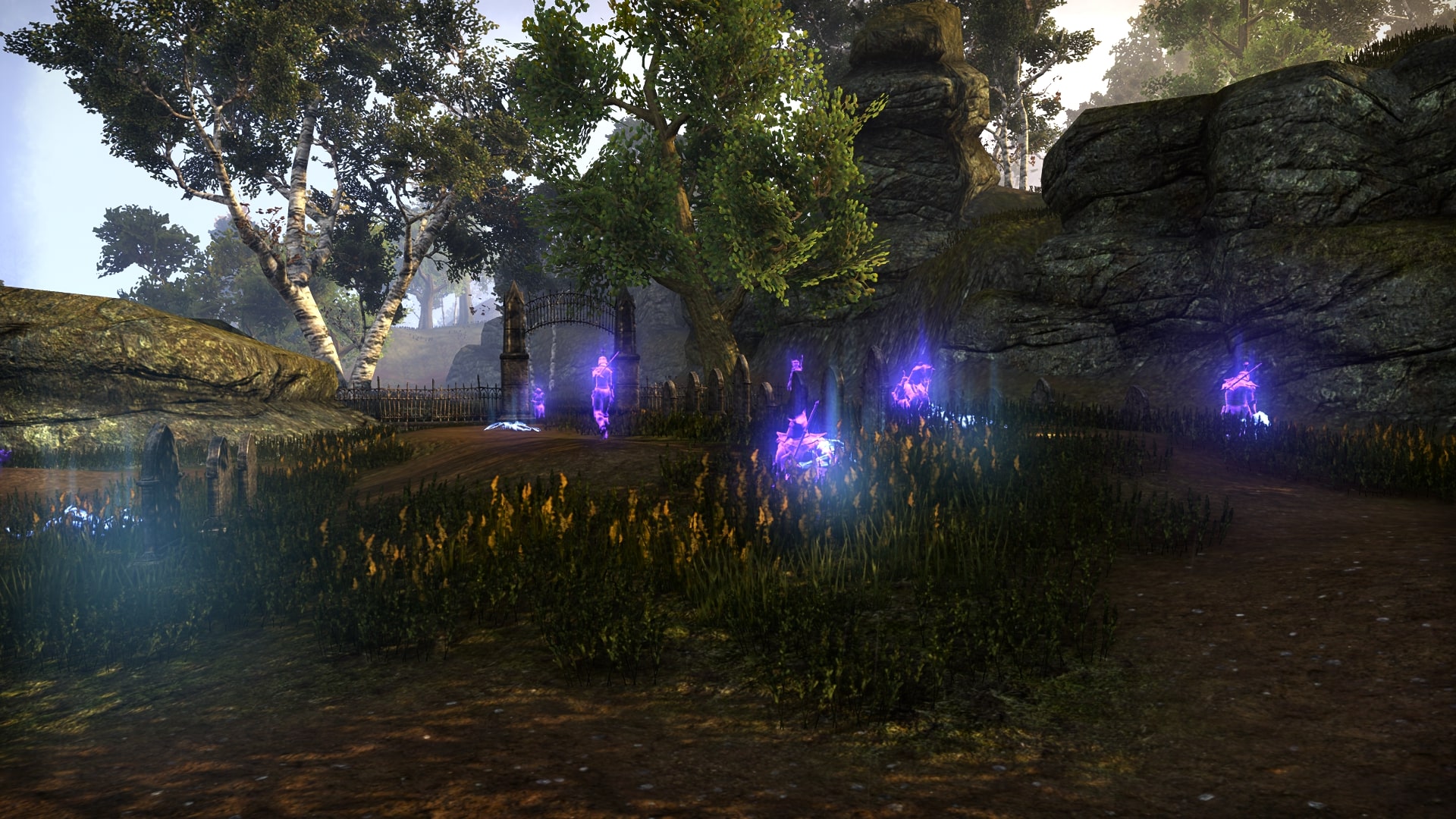
The vanquished spirits of a forgotten battle fought in another age have risen seemingly unbidden from the graveyard at Moffka’s Lament in south-eastern Cyrodiil. Perhaps it is the endless turmoil in this land that has disturbed their eternal rest. Or maybe it is the land itself that has roused them in response to the wounds it suffers from the Banners fruitless war.

These Orc and Ayleid soldiers are believed to have fallen in a battle for the nearby Fort Variela. That they were buried in the same graveyard appears to be a rare act of honour and grace by whomever the victor was. Yet as I approach they seem to have forgotten what animosity they had for each other and attack only me. Perhaps it is that they never did fight against each other, but together against a common, more deadly foe? Either that or there really is nothing the dead hate more then the living.

The spirits themselves return still dressed in the weapons and armour in which they fell. I wonder after my own death if I am to be risen again whether I too will appear as I died, or maybe I will rise as a shadowy ghost; anything but a skeleton, I don’t think I would enjoy that.

672 (g). Nothing the dead hate more then the living

S.K

671. Better to die with conviction, then to live with none

671 (a). Better to die with conviction, then to live with none

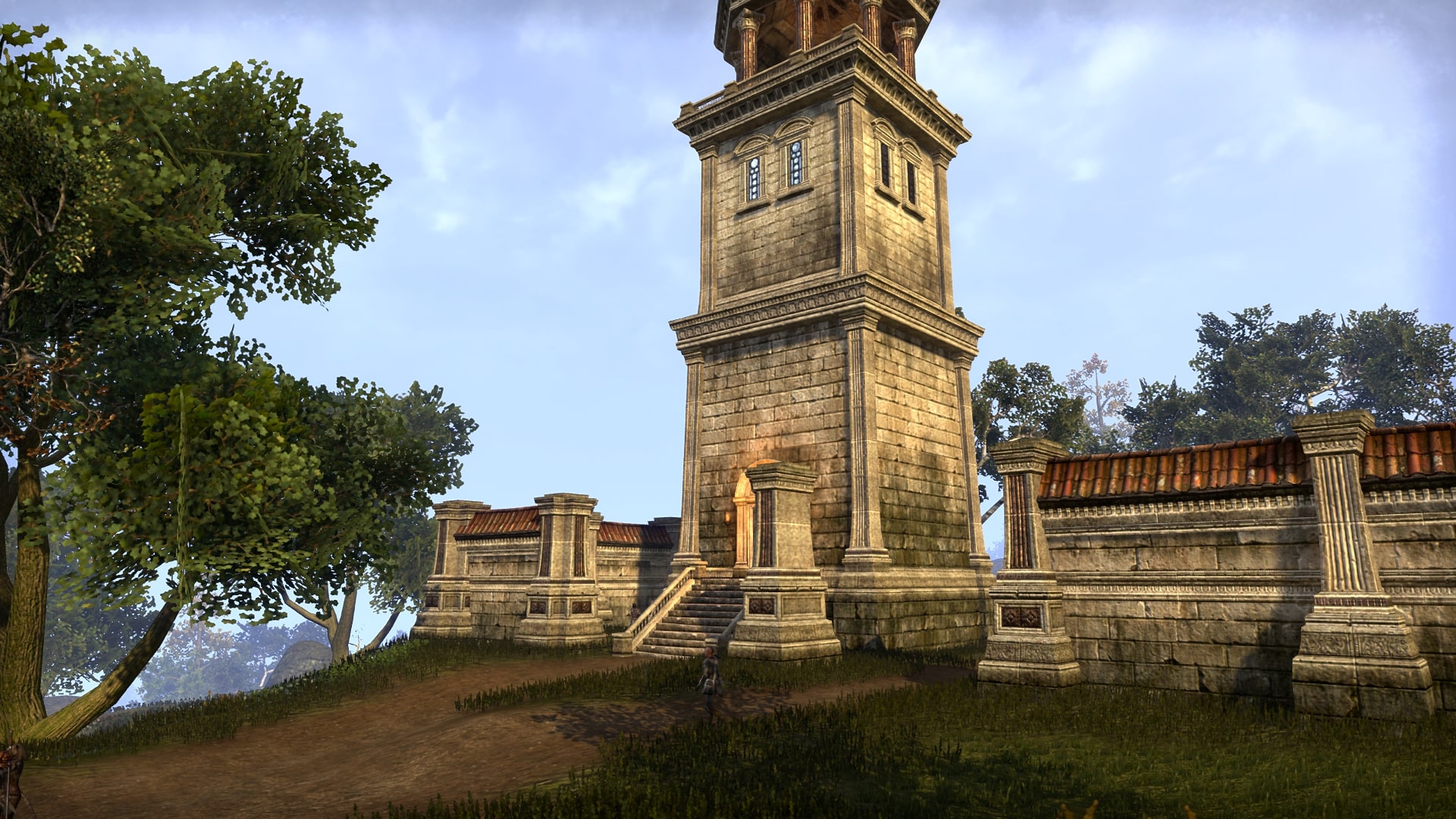
The Riverwatch tower in south-eastern Cyrodiil appears to have be abandoned, but as I ride closer I notice a robed figure trying to break down the door. Dismounting to investigate further, as I approach the tall robed figure turns towards me, and he and his cronies attack without hesitation. If I had been a passing pilgrim, a tradesman, a refugee, or any other innocent Cyrodil coming to this watchtower for aid, I would no doubt now be but a victim. Unluckily for Absolon and the rest of these Aldmeri Irregulars however, I have seen far too many winters to be caught out by their unprovoked attack.

I guess it could be my Imperial armour that triggers these rash acts of violence against me, for I seem to be getting attacked from all sides in Cyrodiil, including the scattered Imperial units. But no matter the danger, I shan’t be changing my armour just to appease others. I wear the emblem of the red diamond with pride, as a symbol of the spirit of Alessia, the virtues of Akatosh, and the oath I took to protect the Imperial Province upon joining the Legion. Others might hide their vows, I wear mine upon my chest.

S.K

670. Forsaken history

670 (a). Forsaken history

That such an important site in humanity’s history in Tamriel should now be abandoned to necromancers should fill us all with shame. For here at the ruins of Sardavar Leed, just south of Lake Rumare in the Great Forest, there once stood the notorious Ayleid settlement known as Sard. It was here that the Ayleid’s would bring Nedic peoples from all across eastern Cyrodiil and beyond, to be trained inhumanely as slaves for their Elven masters.

But it was also here where a young girl, whose destiny it was to change the world, was first brought as a youth in chains to be raised as a slave. It was here that the thrice blessed Saint Alessia first prayed to Akatosh for deliverance from slavery for her people. Eventually her prayers would be answered and she would escape to lead the slave rebellion which would result in the collapse and extinction of that most wicked Ayleid Empire.

670 (e). Forsaken history

Now another more contemporary elf holds these ruins with equally nefarious purposes. Velandare, a high elven bonelord, leads a gang of summoners and their Daedric pets in necromantic rituals from atop the ruins. I shall take a great satisfaction in ridding these ruins of this elven scum. Alas no doubt that necromancers will again return to this site that is forever stained in the blood of generations of our Nedic ancestors. Hopefully other adventures can continue to clear these ruins until a time when this fruitless war is over and a fitting memorial may be erected in honour of those who bleed, suffered and died in cruel bondage to those insidious Ayleids.

And whilst I cannot bring myself to support the Breton king over the Nord, or vice versa, I shall never accept the Heartlands ever again being under the boots of an elf; whether they be unforeseen or treacherous worm.

S.K

669. Bandit country

669 (a). Bandit country

The North Weald and it’s surrounding area in southern Cyrodiil was thought a dangerous place to travel even before the alliances brought their Banners War upon our lands. But now, with no Legionary patrols or other support from the Imperial City to protect it, and with the Banners soldiers displaying little to no empathy towards the innocent peoples of the Heartlands, this area appears to have fallen completely under the control of bandit gangs.

One such bandit gang has completely overrun the village of Pell’s Gate. It is said to have started with a few threats against the most vulnerable villagers, followed by a few night raids upon their livestock. And when their wickedness went unanswered, the pillaging only got worse, until one night a large group of heavily armed bandits descended upon the village from the ruins of old Fort Homestead, killing what villagers they could catch, before ransacking and destroying their homes and farmlands. Now it is but a carcass.

A little further to the south the Grey Host bandit gang feels so emboldened that they have built their own fort to operate out of. These bandits are little more then rats and skeevers plaguing the unprotected villages and farms, and picking at the bones of the Banner’s battlefields. It is a travesty that the innocent citizens of the Heartlands, the only group of people in these Divine forsaken lands who are not fighting, not killing, not burning and pillaging, the only group of people who are trying to keep life going in the midst of a war, shall perhaps be the only group who will not survive it.

S.K

668. The Unseen Queen

It is inevitable that all Kingdoms rise and fall. From the great continent spanning empires that rule the masses, to the resilient city states that endure the changing ages. From the unseen subterranean kingdoms of nature and beasts, to the smallest of the green skinned tribes. They all have their rise, their pinnacle, and their fall. But whilst the annals of the great empires and cities of Men and Mer are all recorded for posterity in great historical tomes, the histories of the smaller kingdoms, often pass unknown, unseen, and thus forgotten.

For them there are no tomes gathering dust in a mages college, or spinners stories spun, bards songs sung, or campfire tales told. But that doesn’t mean that their lineage never existed. For any form of society to survive, be they tribes, prides, packs or herds, they all need a leader. Although we may never know who reigned or for how long, or how they rose, or what was to be their downfall. And because their history is not recorded, or indeed cared for by the ‘enlightened races’, then even the all seeing golden eyes of Hermaeus Mora, neither sees nor records their rise and fall.

So here within the Bloodmayne Cave of Southern Cyrodiil, for the sake of ‘He Who Records All Knowledge’, I hear-by report the existence of a kingdom of giant insects, led by a Spriggan queen Acanthia, Chosen of Nirn, and her downfall by my blade. It will be for others to record if she is replaced and the kingdom rise again, or forever fall and to history forgot.

S.K