178. The Eternal One

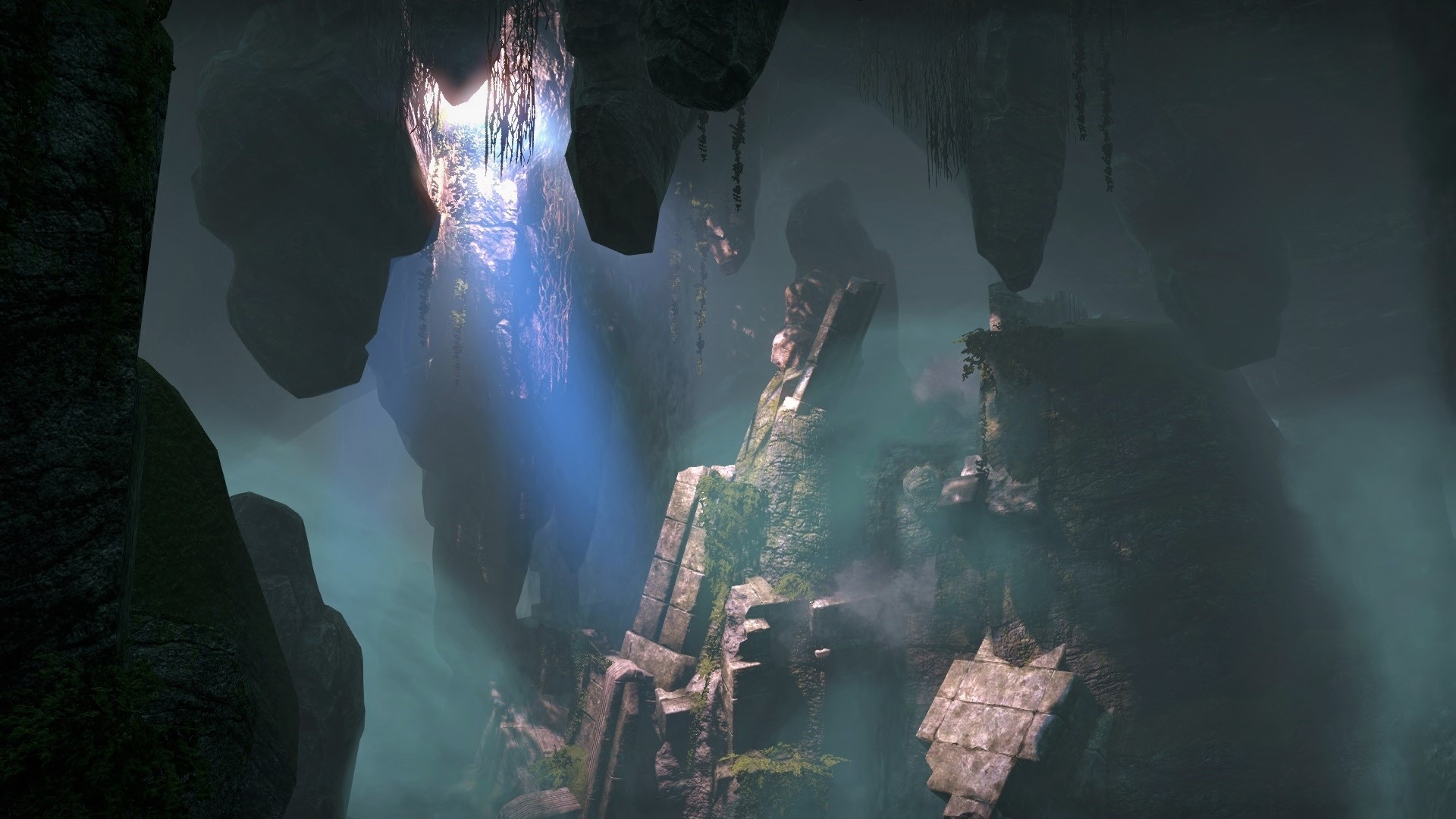
Old ruins are riddled with histories and stories of imbrued betrayals and bloody tragedy.  These stories are sometimes written down by scholars to prove myth and legend ridiculous, and sometimes they are sung by bards because myth and legend prove far more interesting then truth.  There still exists however mysteries in the deepest depths of delves that truth and myth have both forgot.

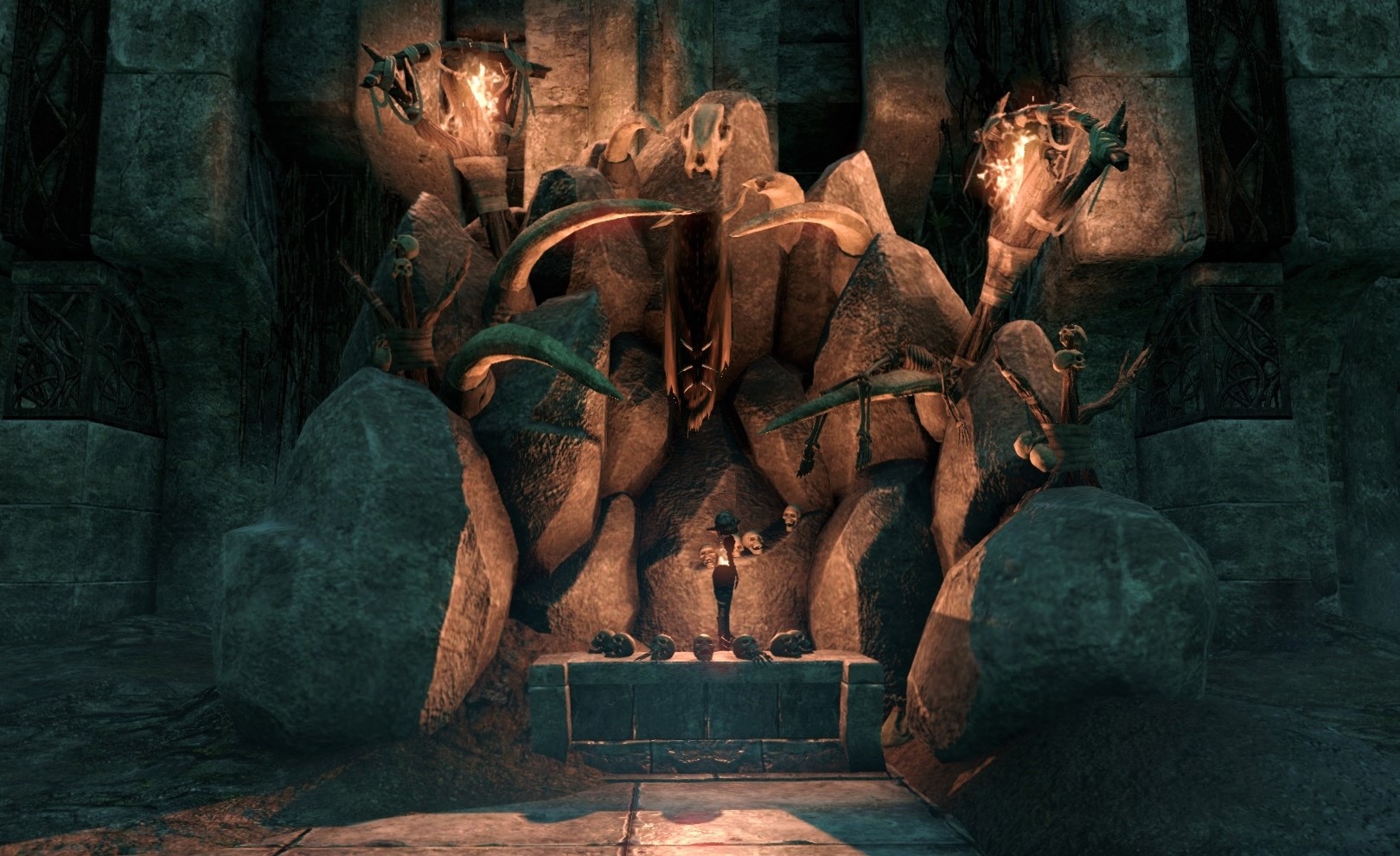
At the heart of the Bonesnap ruins lays an immense fathomless antechamber where a skeletal figure sits atop a stone throne.  From this throne rises a ghostly apparition of shade and fog, a ghoul, a shadow, a wraith of gathered coldness.  As it rose it bellowed a scream as chill as frost’s own tongue that bit at my very bones.

From the blackness of Nirn’s heart the Eternal One has risen, and in obeisance to fate, we do battle.

S.K

176. The Bonesnap Ruins

This slideshow requires JavaScript.

Beneath ground in the catacombs and caverns of the ancient ruins known now only as Bonesnap, the Lion Guard expedition is trapped.  Whilst battling with the goblin tribe they were sent to scout, they were ambushed by a creature of Daedric origin.  Now its members are scattered throughout the ruins.

The battlemage Gaston thinks that the creature was bound to a time-worn Welkynd Stone, released when the goblins smashed the stone to use as totems.  He believes that if we are able to recover the fragments he may be able to re-bind the creature.

Whilst serving with the Imperial Legion back in Cyrodiil, our unit was tasked with the safeguarding of a party of Altmer archaeologists through an ancient Ayleid ruin to the north of Fort Rayless.   On the whole the party were as haughty and snobbish as one might expect a gaggle of Elven scholars to be.  Their leader displayed an especial talent for conceit, and spoke only in over-loud preach and proclamation that more than once attracted the unwanted attentions of bloodfiend and brute.

I remember as we first entered the halls, she theatrically lowered her body to the floor and announced to all, that the ground was the first place one should look if one wanted to learn the history of a ruin.  “If one studies close enough” she said, “one can read the footfalls and tread marks of those who walked before.  From the tramp of the soldier, to the toddle of the child, the flounce of the maid, to the strut of the noble, the trudge of the commoner, to the shamble of the elder, each footfall tells a singular story.”

As I stoop to study the floor before me, all I can make out are the tracks of many, many goblin feet, the huge tread of the ogres, and the foul dung of the durzog.  There is no history left to be found here that the goblin horde has not befouled and despoiled by its very presence.

S.K

175. Goblin infestation

An ancient ruin lays to the south, under which sprawls a labyrinth of subterranean halls and caverns.  Its Ayleid name is long forgot, but the locals now refer to it as ‘Bonesnap’ after the tribe of green-skinned goblins that have made these ruins their home.

The locals tell of how recently a Lion Guard expedition entered the ruins in order to assess the full extent of the goblin infestation, but there has been no word or sign from them since.  In fact, the goblins have become more conspicuous and aggressive than ever before, attacking anyone unfortunate enough to venture too close.

It appears I shall have to fight my way in if I am to discover what fate has befallen this lost expedition.

S.K

174. Crime and punishment

174. Crime and punishment

The Redguard envoy is demanding the execution of Sir Hughes for the murder of King Fahara’jhad’s daughter, whilst Sir Edmund pleads for leniency, claiming Sir Hughes mind and actions were not his own.

Once more it would appear that the greatest threat to this Covenant comes not from forces without, but from friends within.  Yet that is not the whole truth.  There is always to be found an outside influence, whispering, persuading, guiding, and corrupting.  It is in the minds of every individual that this battle for Tamriel will be fought and eventually won or lost.  I wonder that we are still able to trust at all, but we do, because in spite of everything we believe we still share the same ideals and principles of those about us.

I find it difficult to believe however that you can make somebody do something they really don’t want to do, even under the influence of witchcraft and sorcery.  To manipulate someone into such an immoral action, you would surely have to work on something that already exists inside of them.  A buried sentiment perhaps, a bigotry born of ignorance, or a misogamy born of naiveté.

Or perhaps it was just that the weight of duty was too much for him, and he desperately needed somebody to lift that burden of responsibility.  That he is guilty of nothing more than an inability to cope with expectation.

Sir Hughes is not a bad man, he is a weak man.

Is being weaker than required a crime worthy of execution?  Is total culpability the price of responsibility?  Is the guilt of Sir Hughes not that he committed such a repugnant act, but that he shed his responsibility for his own actions?

As a soldier the answer I give is this… 

A man is nothing but what he makes of himself.

S.K