396. Mirudda and Huzal

12

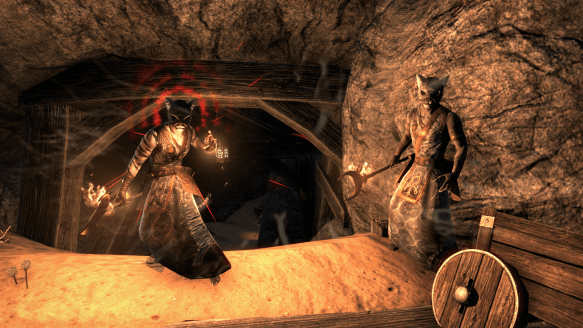
I delved deeper into the Sandblown Mine in the eastern Alik’r, attempting to discover the intentions of the Khajiiti bandit gang who now occupied the barren caves.  Eventually I reached it’s deepest chamber, and in a far corner, amidst scattered human bones and carapaces of large spiders, I found the bandits leader Mirudda, sat upon a rock gently petting a giant snake curled up beside her.

The scene reminded me of an old Redguard proverb I’d heard, ‘Those who believe that love can conquer all, should try giving a kiss to a desert snake.’ Unfortunately whilst I was contemplating this, the hungry serpent picked up my scent…

S.K

395. Unwelcome guests

25

When a mine in the Alik’r stops yielding its precious metals or minerals, it is often just left abandoned and falls into ruin and disrepair to be eventually reclaimed by the sands. However, little of late that is abandoned in Tamriel remains unoccupied for long as I was to discover when I sought refuge from a sandstorm in the old Sandblown Mine on the Southern Tigonus road.

Whilst I was offered only a hostile reception by the band of Khajiit hiding in the barren mines, they themselves were being treated as unwelcome guests by the giant spiders that had already made the dismal shafts and caverns their home long before the Khajiiti bandits arrived.

S.K

394. Shame of the Redguard

12

76

Travelling through the southern Alik’r, I discover the crumbling vestiges of an ancient temple deep in the eastern Tigonus. There are no signposts to direct you to these secluded ruins, and no map will tell you that this is known to only the few as the Tears of the Dishonored; because this is the shame of the Redguard.

These cursed grounds serve only as an open graveyard for the bodies of those thought beyond redemption, the disgraced, the sullied, the dishonoured. Their dead bodies are dumped, unwashed, unconsecrated, and unburied. Redguards who in punishment for crimes they committed in life, are denied passage to the Far Shores in death.

Remains of both women and men lay all about the ruins in varying states of decay, their exposed limbs sun-blanched and distorted, the dank, putrid smell of their rotting corpses hanging so heavily that even the jackals refuse to dine here. Instead harpies and buzzards gather in the air about to pick and squabble over the freshest of the cadavers.

The only other visitors that the residents of this graveyard receive are the Hagravens seeking fresh additives for their vile concoctions, and the ghosts of those denied their journey to the Far Dunes, howling injustice upon the desert winds.

These are criminals condemned in the name of honour, killed in the name of law, and damned in the name of justice. For the Redguards, honour, law, and justice are the homefires around which their colonization of Hammerfell has been built, yet sometimes smoke from those fires can becloud the eyes of even the most wise, and the innocent can be condemned as guilty.

Is justice best served by condemning an innocent person to eternal damnation, at the risk of saving a guilty one from the same fate? Is it not enough for people of the desert to punish the guilty by forfeiting their life, or have they now usurped their own Gods by deciding themselves who is worthy of making the journey to the Far Shore?

In the Alik’r the unconsecrated dead have developed the rather unpleasant habit of rising again of late. Bury them all I say for the sake of the dead… and for the sake of the living.

S.K
393. The Baandari Caravan

Screenshot_20181106_222152Screenshot_20181106_222217Screenshot_20181106_222318Screenshot_20181106_223007Screenshot_20181106_222800Screenshot_20181106_222731

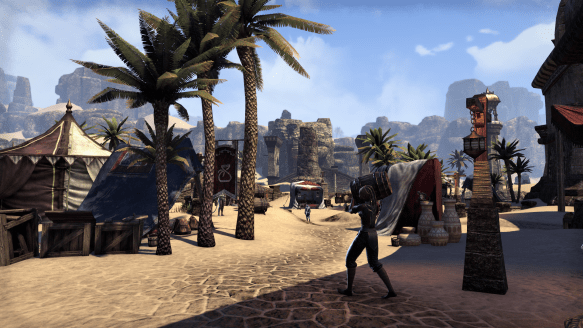
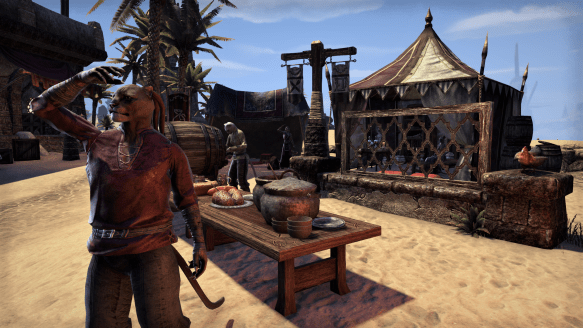
The Baandari caravan at the desert town of Kozanset prepare their stalls for another busy day of haggle and barter under the ever mistrustful watch of the local Covenant Guard. They say that there are three things you will find in every town of Tamriel, a tavern, a wayshrine, and a Baandari peddling his wares. 

Having lost their own lands many years ago, the Baandari do not recognize boundaries or territories as the rest of us might. The Baandari’s only concern is profit, and nothing makes them purr more then salvaging one persons junk and selling it to another as treasure. They have little understanding or care for the politics of the Three Banners war, and would take equal pleasure from selling sand to a Redguard, snow to a Nord, or a mirror to an Altmer.

With starlight shining in their eyes, and the moonbeams of Masser and Secunda in their veins, the Baandari caravan follows the many roads of Tamriel at night to arrive before dawn to set their tents and stalls in the next town, heedless to the colour of the banners that fly above its gates.

They may have no land, no home, and no banner of their own, but perhaps because of this, the Baandari may just be the only people of Tamriel who are free.

S.K

392. Better the harpies you know


Screenshot_20181104_200215Screenshot_20181104_194752

Screenshot_20181104_194038

The Jackals of the desert wastes prey upon those too weak and vulnerable to defend themselves from the pack. In the myths and legends of the Yokudans, the jackals were often associated with guileful brigands and shrewd sorcerers, who practised plot, ploy and ruse to exploit the most susceptible.

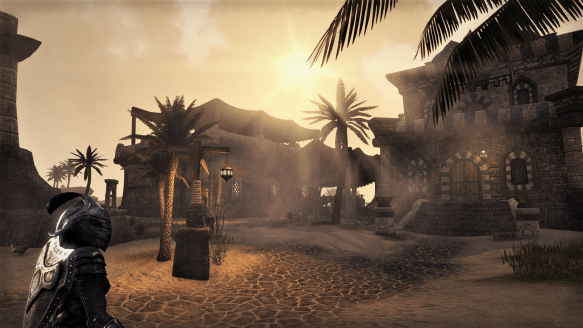
The Redguard city of Kozanset in the eastern Alik’r has fallen under attack by harpies who descend from their nesting grounds in the hills to peck and claw at both the residents and their livestock. The magistrate, short on guards, asked a recently arrived Colovian mercenary group for help. The mercenaries however soon turn out to be little more then a pack of jackals, bullying, exploiting, and extorting the defenceless locals. The townspeople now question which is the worse, the harpies or the mercenaries, and some even openly suggest that the mercenaries themselves may be responsible for the sudden harpy aggression.

Perhaps in the desert it is better the harpies you know then the jackals you don’t.

S.K