585. The Atronach King

The elemental monarchs told that the Celestial Serpent manipulated them to create a powerful new atronach to command it’s elemental army. They warned that Parel Nirus had the ability to take on the elements of the all the other atronachs, so I entered the great hall of Balamath expecting nothing less then a tempest. What greeted me was a hulking tri-faced atronach wielding a huge heavy sword in each of it’s six wafting hands.

They say that there is a calm to be found at the centre of the storm but when facing the full fury of an Air Atronach that simply isn’t the case. With six great swords swinging wildly from every angle possible, you can either grit your teeth, raise your shield, and pray that the old adage ‘the more violent the storm the quicker it passes’ is true; or you learn damned quickly how to dance in the rain without getting wet.

The air monarchs defeat has broken the chain of command from Serpent to atronach, it is now up to the Star-Gazers with the help of the heroic coward Kelmen Locke, to end the threat of the Serpent’s elemental army for good. I must look to the west where the threat to Craglorn is now greatest.

S.K
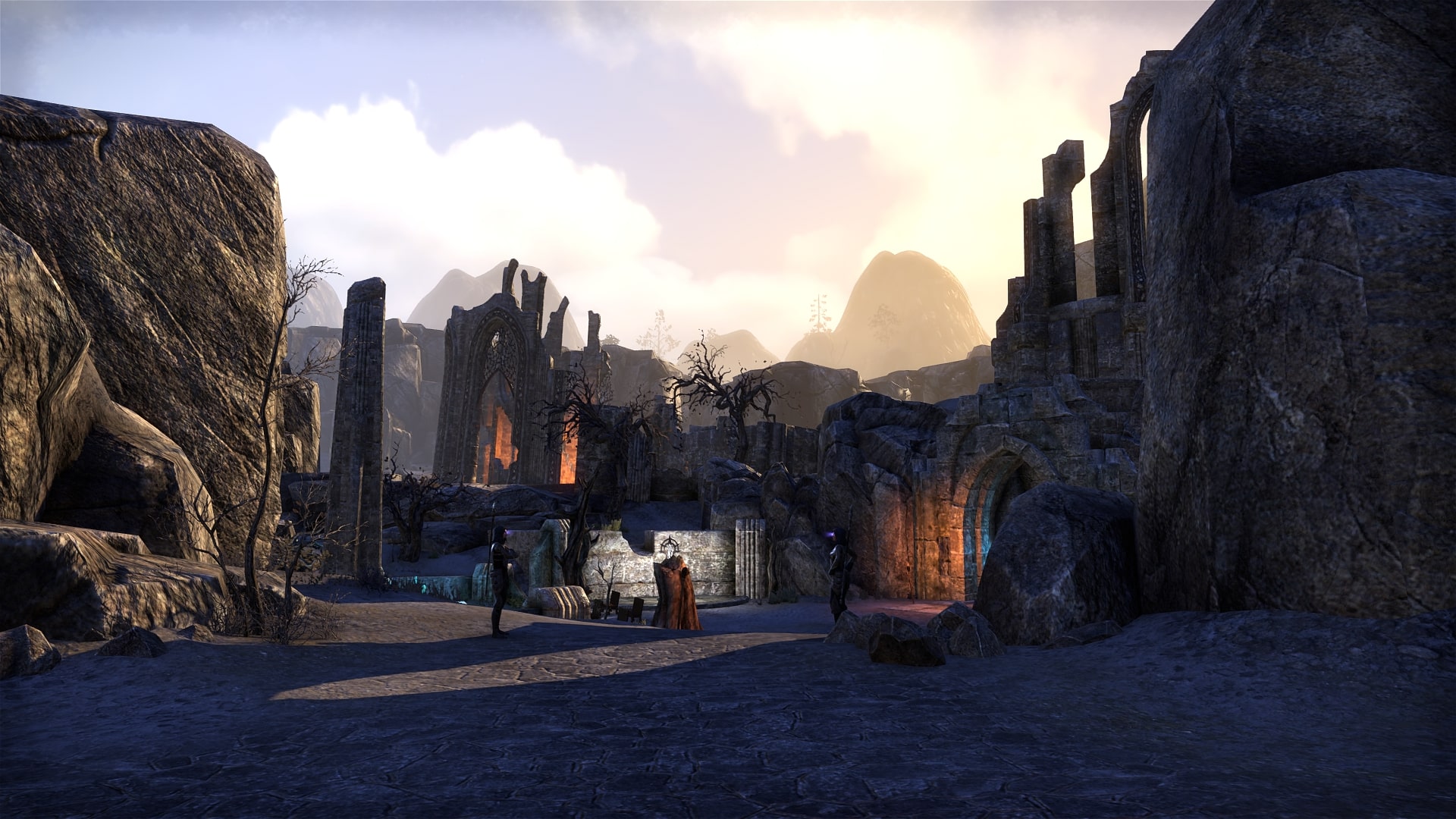
584. The conjurers of the Balamath

584 (a). The conjurers of Balamath

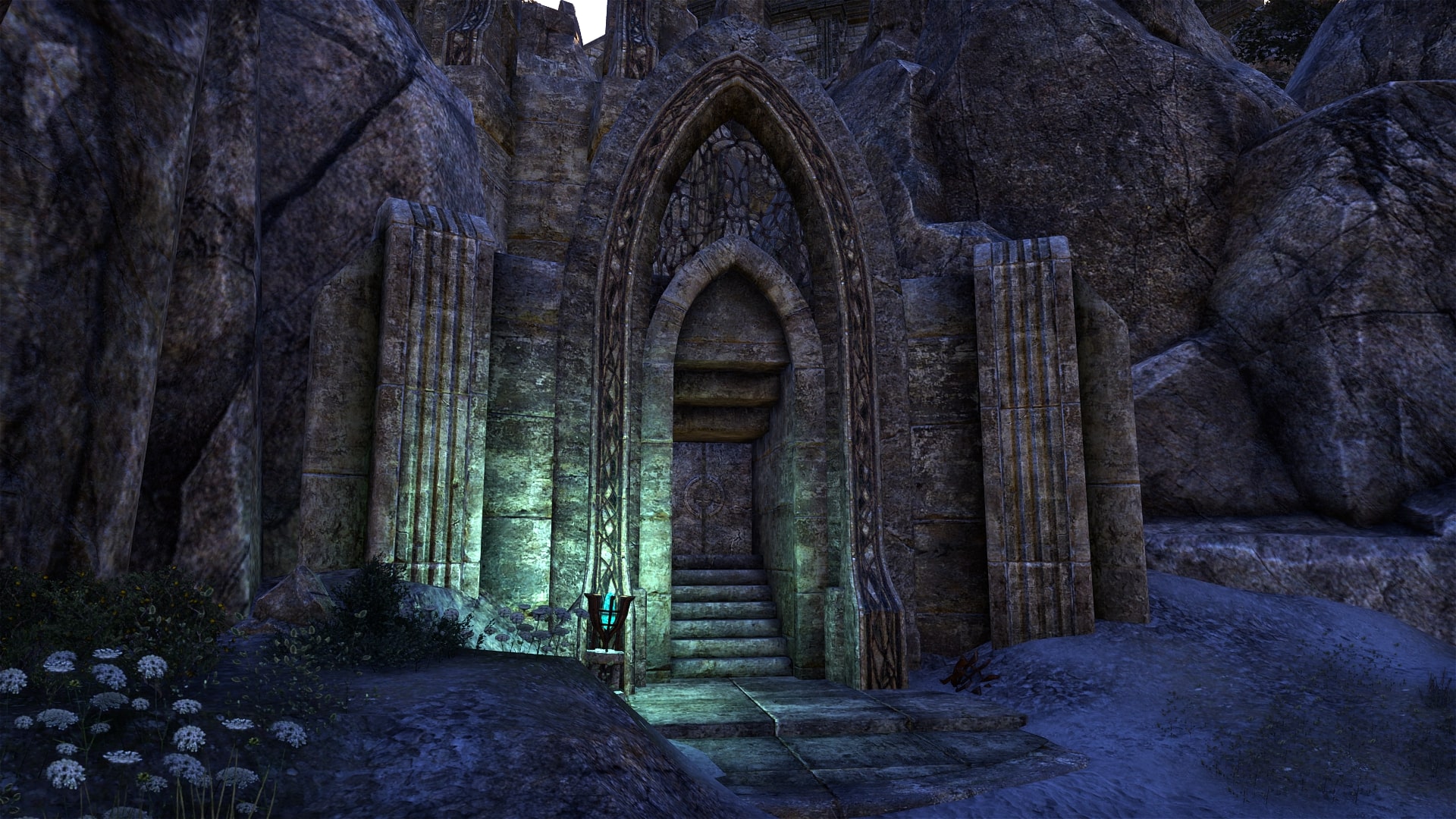
One wonders how the Blackcaster Mages Guild were able to secretly master their control of the atronachs that aided their purge of Elinhir without the blessing of the Celestial Mage. Perhaps it was here in Balamath, hidden away from the rest of Craglorn in the ruins of an ancient Ayleid citadel, where the Blackcaster conjurers are able to experiment and practice free from scrutiny. There is certainly something suffused about this place; the air about feels charged and fraught, whilst atronachs are free to roam across the hillsides.

584 (d). The conjurers of Balamath584 (e). The conjurers of Balamath

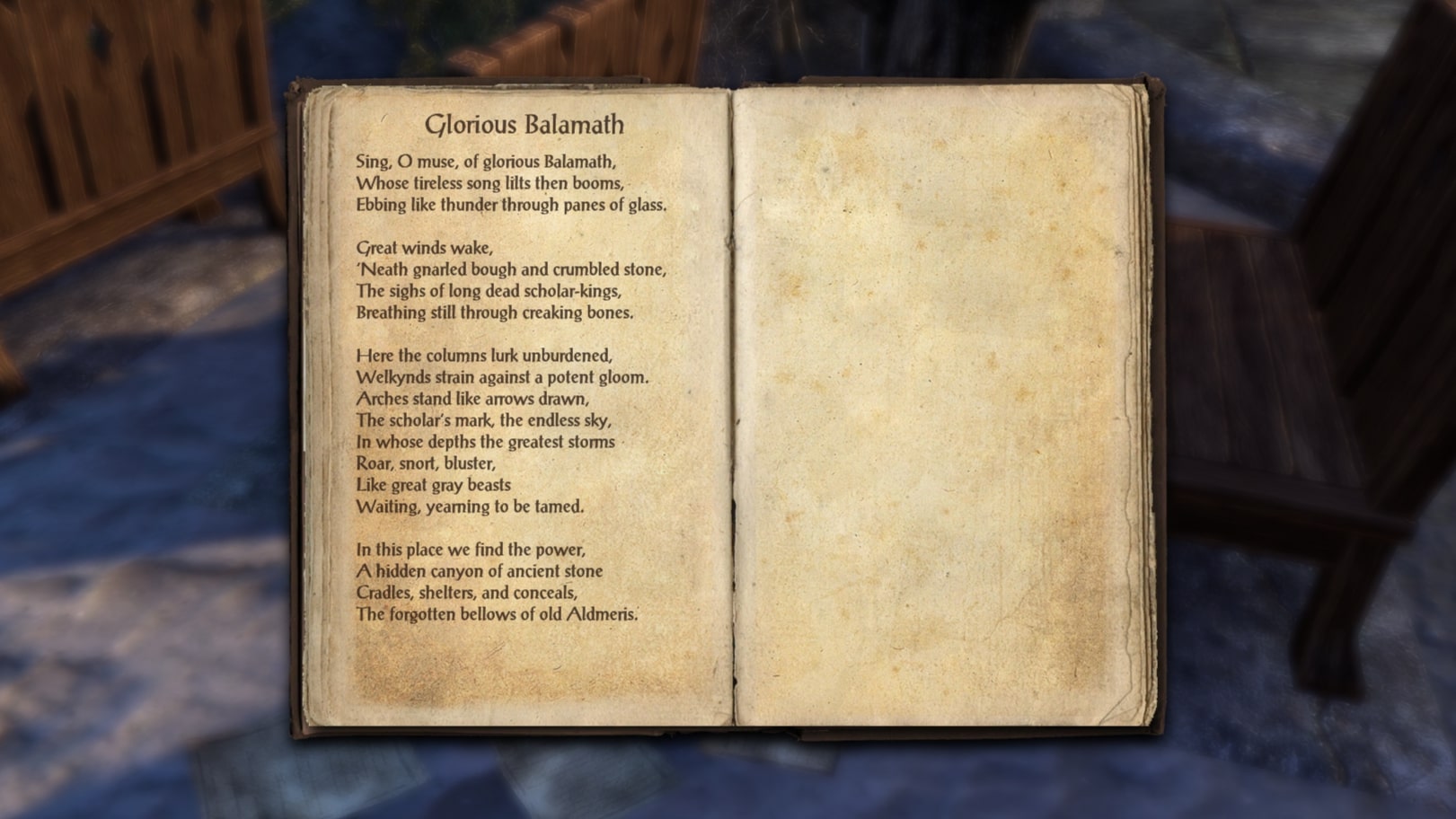
An old book found in the open ruins, the Glorious Balamath, muses poetically about the elemental temper of these ruins. Some have speculated that this place my well sit atop a convergence of some sort of elemental ley lines. It has oft been theorised, yet generally dismissed as hokum by the court scholars, that we mortals share the same energy, elements if you will, that makes up everything from a blade of grass to a great Wamasu. And that when we die our elements dissolve one by one into the other and return to some primordial pot awaiting to be recreated anew. By such hypothesises have scholars clashed quills like blades and spilt ink like blood for millennia.

584 (f). The conjurers of Balamath584 (g). The conjurers of Balamath

What even this laymen can see however is that for these conjurers the control of the elements seems to share much the same effect as does moon sugar upon the back-country Khajiit. It appears to fill them with an almost spiritual exhilaration. And just like the skooma-addled it abstracts them from reality, and the more they indulge the more liable they are to drown in their abstraction, and eventually all that will be left of them will be but spellfiends in the desert wastes.

S.K

583. Humbling the haughty

583 (a). Humbling the haughty

The elemental monarchs are powerful daedra created by the Celestial Mage to help keep control of the tempestuous atronachs. But when the ever-twisting Serpent began to corrupt the fallen aspects of the Mage, it also created a new monarch to rule the three, and thus secured under it’s command a ready made elemental army with which to torment eastern Craglorn.

583 (d). Humbling the haughty

But now that the Celestial Mage is hopefully fighting to break free from the Serpent’s artful influence, it is time to break this armies inclement chain of command.

583 (g). Humbling the haughty

There is nothing more distasteful to daedra then to be indebted to a mortal, and these monarchs are far too conceited to help us to help them. Indeed it seems they would rather witness the subjugation of their creator then to suffer such an indignation. So we need to find and humble the three haughty monarchs who hide like skeevers under mountain and rock, and then bind them to give up the location of this new arch-monarch.

583 (j). Humbling the haughty

S.K

582. Thalmor’s folly?

582 (a). Thalmor’s folly

Whatever the delve of Molavar was in the past, the flaming pith of its mountain hermitage has made it now unfit and unsafe for mortal habitation. The clever Thalmor however found another use for the lost settlement, turning it into a prison for a necromantic vampire convicted of a wicked tally of heinous crimes. It’s jailers are the flaming atronachs, imps and colossi summoned to these broiling halls by the indicters, and perhaps even the undead denizens of the long lost settlement; although they may well have been risen by the necromancer herself.

582 (d). Thalmor’s folly

But was it really so clever of the Thalmor to imprison an immortal monster as a punishment rather then destroy it? It is certainly a decision I believe that no human court would have decreed. Perhaps for the long lived Altmer the idea of an eternity of imprisonment seems a far worse fate then quietus itself. But surely for such a punishment to be logical then the convicted would have to be capable of feeling guilt, remorse, and contrition.

582 (h). Thalmor’s folly

Instead this monster under the mountain is only capable of feeling resentment, rage and enmity toward the living. It is almost inevitable that the undead creature will eventually escape, or be released by intent or misadventure to ignite blistering vengeance upon Tamriel. So it falls to me to correct the Thalmor’s folly and turn this monster to ash.

S.K

581. “Why was I not made of stone like thee?”

581 (a). Why was I not made of stone like thee

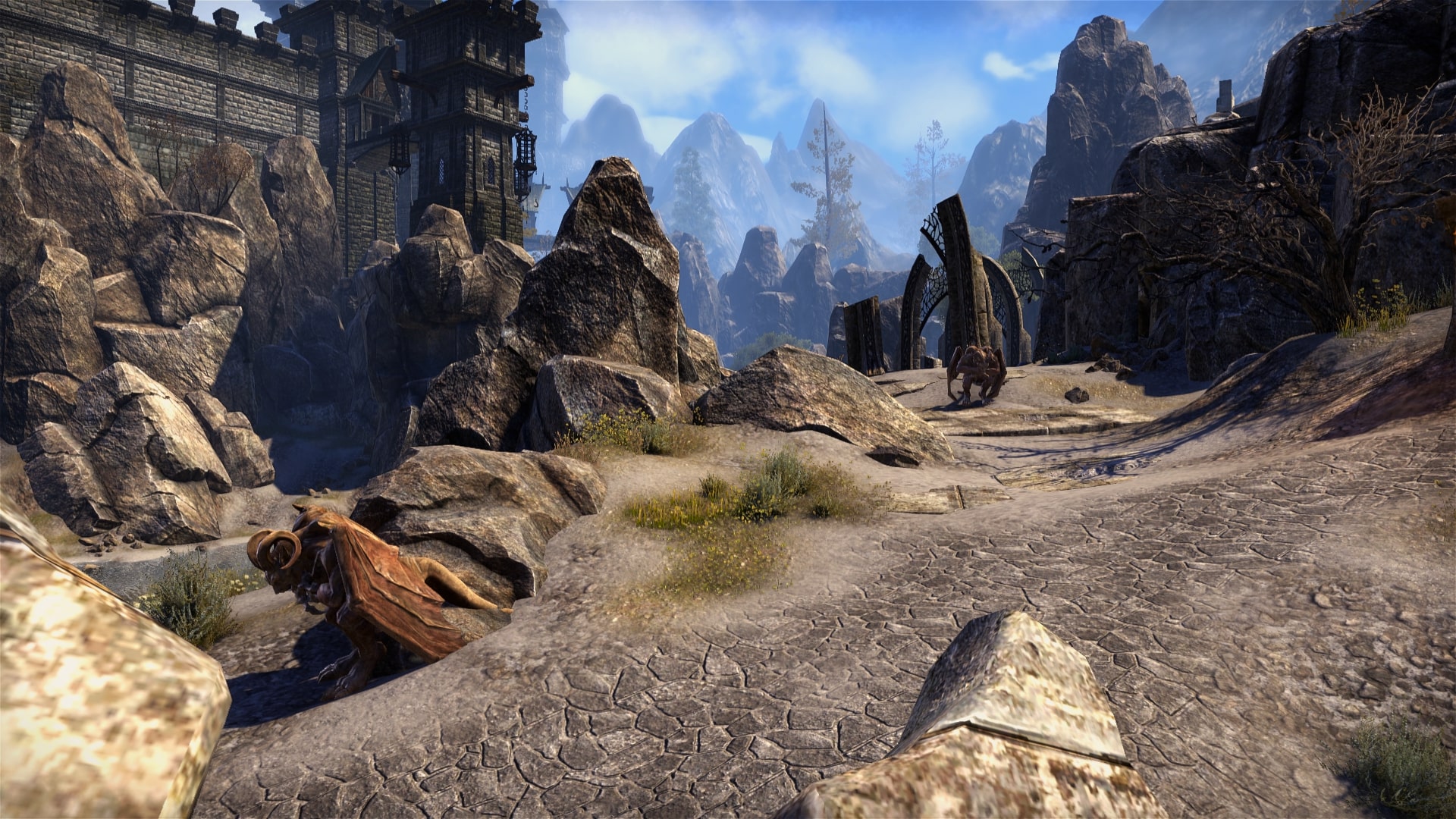
The pass to Molavar in eastern Craglorn is guarded by sentinels of stone. Crouching lifelike yet lifeless, these unnatural figures with their great claws, goatish horns, and batlike wings are seemingly carved out of the very rocks that furnish the surrounding foothills. So pacific they sit that even the leeriest are liable to tread closer then their jitters would usually bear. And that is exactly when the gargoyle will spring into savage life and attack like a rabid werebear.

These gargoyles are but golems, atronachs if you like, typically animated by masters of the mystic arts to serve as guardians. The only question is whether these monsters were crafted to keep us out of the ruins of Molavir, or to keep something in?

S.K