356. Liberated from ambition

Screenshot_20180319_204812

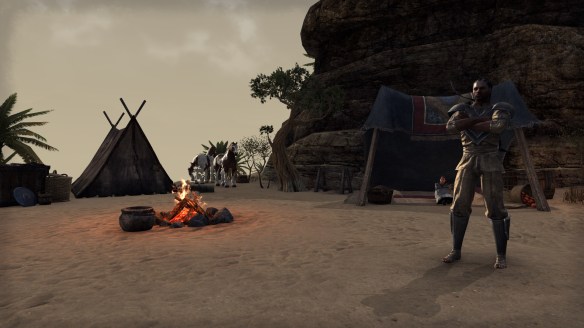
The Ash’abah maintain a constant vigil over the temple at Tu’whacca’s Throne, for here lies buried some of the Redguard’s greatest heroes.  Yet their watch could not prevent the Withered Hand necromancers from awakening the corpses of those heroes from their consecrated tombs.  As I am now also Ash’abah, the duty falls upon my swordarm to return them to the ground. 

In life they were great warriors, leaders, and champions.  They were driven to make a difference by something they had deep inside of them, whether it be a desire, a dream, an ambition, or an indomitable will.  That is what made them strong, and that is what made their enemies flee from their charging banners.

But I wonder, how could these undead husks of the former heroes be a danger still?  They have no desire, no will; from where do they draw their mettle?  In the end what are we but the sum of our dreams and ambitions.

In truth, I have forgotten what my dreams and ambitions were before I was made soul-shriven.  Perhaps it was to find a companion and start a family, or perhaps I wanted none.  Maybe instead I dreamed of travel and adventure, of dying the hero with sword in hand, or possibly I just wished to grow old and watch the sun go down in peace in my own garden.  I can no longer recall.

Now however, now my sole ambition is revenge.  Revenge against that wretch Mannimarco who brutally tore out my soul with ritual and bodkin.  Revenge against Molag Bal for commissioning that vile deed to feed his malevolent schemes.  Revenge against the cultists who stole from me my former life and liberty.

But these undead who do not dream, and have no ambition, are also liberated from the chains of mortal conscience, the fetters of morality, and the shackles of pity and regret.  And that is what makes these undead husks of the former heroes a danger still.

S.K

355. Tu’whacca’s Throne


1

9

17

1618

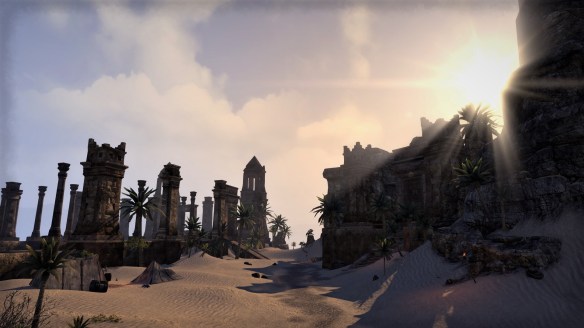
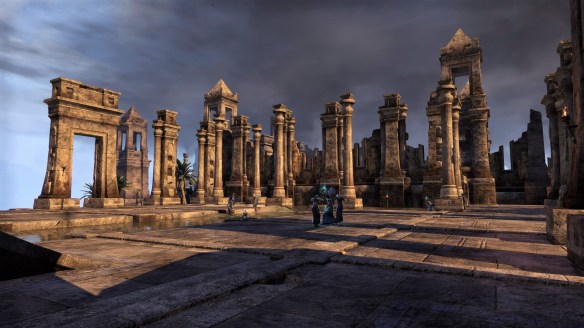
Built atop one of the highest plateaus in the Alik’r Desert, Tu’whacca’s Throne is a vast Redguard pantheon that serves as both a sacred burial ground and a temple dedicated to the Caretaker of the Far Shores, who escorts the souls of their dead safely into the afterlife.

To the outsider, the Redguard may appear to hold their honour to the dead above their duty to the living, but the Redguard believe that we are more than just this frame of bones.  To them, suffering is but a silhouette that shadows our every step, and though each footfall is stalked by sickness, age, and frailty, we must keep walking on, for at the end of the road lies the promise of deliverance to the Far Shores.

It is ironic then that the bodies of their consecrated dead have been risen by the insidious magics of the Withered Hand necromancers, and now hold the walls of this great sanctum against the living.

S.K

354. Goblins and Ogres

At the heart of Divad’s Chagrin Mine in the Alik’r can be found the leaders of the Sandgrubber tribe, the Goblin Shaman Nokhailaedhaz, and the unimaginatively named Ogre, Even Bigger.

Scholars believe that Goblins and Ogres share both heritage and deity, so it is no surprise to find them sheltered together in this makeshift burrow.  Indeed, it was not so long ago that giant Goblins, who it was said could rival Ogres in both strength and size, would walk these very sands; until the Ra Gada arrived in Hammerfell to drive them from their desert home.

Whilst in most primitive and barbaric Goblin societies it is often the biggest and strongest of their number who leads, in this case it is safe to surmise that the more intelligent Goblin Shaman holds the stronger influence over the Sandgrubbers.

Back in my homeland of Cyrodiil, the reclusive Ogres lived in small communities in hinterlands and remote caves, so townsfolk and settlers knew to keep a wary distance.  Goblins on the other hand were aggressive and violent neighbours and as such were actively hunted for by militia and mob, and now only survive in small nomadic packs.

S.K

353. Divad’s Chagrin Mine

The origins and history of the Divad’s Chagrin Mine in the Alik’r Desert is as uncertain as a First Seed morning.  Who owned it, why was it named after an epic Redguard poem, and just how did the goblins of the Sandgrubber tribe come to gain free reign over the mine may never fully be explained.

From the notes I have found and the Dark Elf corpses that litter the mine’s tunnels, it appears that the Goblins were being used to work the mine as slaves, but recently rose up to overthrow their overseers.

It is a temptation to leave the former slaves to their mine as some form of recompense, but history suggests that it would not be long before the tribe began to strike out from their sanctuary to raid and plunder the key South Alik’r road trade route. Perhaps eventually even the nearby city of Bergama could come under threat.  Goblins are bellicose by their very nature, and the more their numbers grow, the more pugnacious they are libel to become.

S.K

352. Once more unto the maelstrom


352 (a). Once more unto the maelstrom

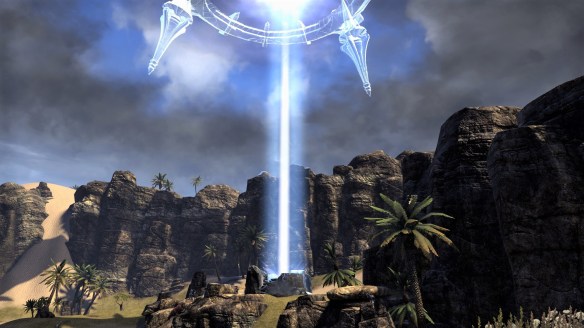
As the dark deviant clouds gather above the Alik’r Desert, the stiff, dry winds whip up a biting sandstorm all about the Myrkwasa Dolmen.  A dread horn bellows in the outer darkness and the foul grapnels of Coldharbour fall from the turmoil in the sky.  Once more unto the maelstrom.

Yet unlike so many other regions that wane under the daily daedric onslaught, this is the Alik’r, home to the  Redguard, the heirs of the indomitable Ra Gada.  No anchor that falls upon the Alik’r goes unchallenged.

To the people of the desert, the anchors are no longer considered a threat and crisis; they are almost welcomed as opportunity. An opportunity to train and sharpen skills, to earn coin and repute from the Fighter’s Guild, and to socialize.

The desert people have turned hunting Molag Bal’s anchors into a sport, and others now travel from all across Nirn just to take part.

S.K